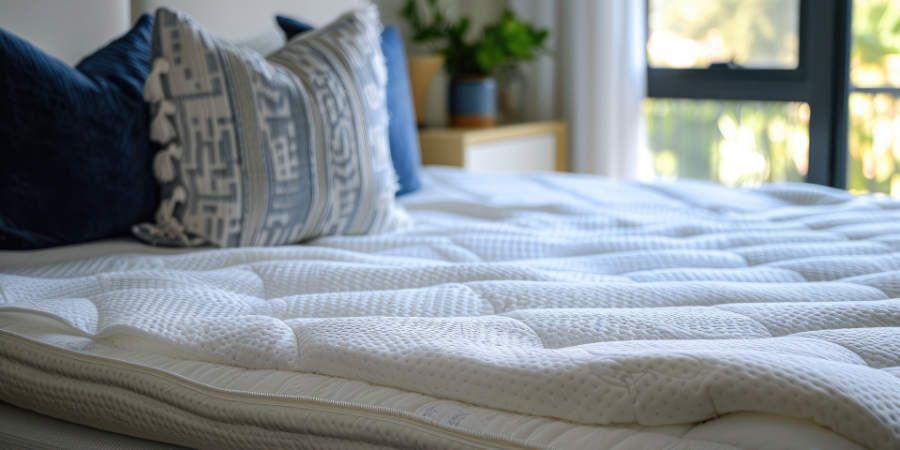
Best Cooling Mattress Toppers for Hot Sleepers
Body temperature drops before sleep onset and stays lower through most of the night. Research from the Sleep Foundation puts the ideal bedroom temperature at around 65 degrees Fahrenheit. A mattress that traps heat works against that drop, and it shows up as sweaty sheets, kicked-off blankets, and restless waking through the night.
A cooling mattress topper solves this without the cost of a new bed. Below, six toppers stand out for hot sleepers, based on cross-checked specs, materials, and independent lab testing from Sleep Foundation, Forbes Vetted, and Mattress Nerd.
Written with the assistance of Claude AI, reviewed by the Sleep Well Tips team using peer-reviewed sleep research
How We Picked These Toppers
Sleep Well Tips did not physically test the toppers on this list. Instead, we cross-checked specifications, cooling technology, and customer-reported results across multiple independent testing labs, then verified pricing and trial terms directly on manufacturer sites. We prioritized toppers with:
- A named cooling mechanism, not just a marketing label
- A firmness range that fits more than one sleep position
- A trial period of 30 nights or longer
- Consistent scores across at least two independent review sources
What Actually Makes a Topper Sleep Cool
Marketing copy throws around the word cooling loosely. The mechanism behind it falls into four real categories.
Open structure. Latex and open-cell polyfoam contain natural air pockets. Heat moves through the material instead of getting trapped against your skin. This is why latex toppers consistently test cooler than dense memory foam.
Infused materials. Manufacturers add copper, graphite, or gel to memory foam to pull heat away from the body and spread it across a larger surface. This helps, though it doesn’t match the breathability of latex or wool.
Phase-change covers. Fabrics like GlacioTex or TEMPUR’s phase-change knit absorb heat on contact and release it once the surface temperature drops. The cooling effect feels immediate but fades once the material reaches equilibrium with your body heat, usually after 20 to 30 minutes.
Active systems. A small number of toppers, like the Orion Sleep System, circulate heated or chilled water through internal tubing. These regulate temperature directly instead of relying on passive airflow, and they cost far more.
The Best Cooling Mattress Toppers, Compared
| Topper | Price (queen) | Material | Firmness | Trial |
|---|---|---|---|---|
| Company Store Essentials | $139 | Down alternative fibers, cotton shell | Medium soft | 60-day return |
| Saatva Graphite | $305 | Graphite-infused memory foam over polyfoam | Medium soft | 180 nights |
| Coop Sleep Goods Cool+ | $399 | Shredded memory foam, down alternative fill | Medium | 100 nights |
| ViscoSoft Active Cooling Copper | $399.95 | Copper-infused memory foam and polyfoam | Medium | 30 nights |
| Tempur-Pedic TEMPUR-Adapt + Cooling | $359 | TEMPUR memory foam, phase-change cover | Medium | No trial, final sale |
| Helix GlacioTex Premium | $465 | Polyfoam and microcoils, GlacioTex cover | Medium soft | 100 nights |
Best Budget: Company Store Essentials Down Alternative
Synthetic down fibers under a breathable cotton shell keep this topper light and airy at $139. It won’t match the pressure relief of foam or latex, and the fill needs occasional fluffing to hold its loft, but it delivers real temperature relief for the price. A 60-day return window gives room to test it out.
Best for Heat Reduction: Saatva Graphite
Graphite pulls heat away from the body more effectively than plain memory foam, and a 2-inch polyfoam base keeps the topper from sinking too far. The medium soft feel suits back and combination sleepers. Saatva backs it with a 180-night trial, the longest on this list.
Best for Side Sleepers: Coop Sleep Goods Cool+
Shredded memory foam mixed with down alternative fibers lets air move through the fill instead of collecting in solid blocks of foam. Side sleepers get cushioning at the hips and shoulders without the trapped heat typical of dense memory foam. Corner straps hold it in place through the night.
Best for Couples: ViscoSoft Active Cooling Copper
Copper infused through two layers of foam offsets the heat retention common in 4-inch-thick toppers. The foam absorbs motion well, so a partner’s movement stays contained to their side of the bed. A machine-washable cover simplifies upkeep.
Best for Back Pain: Tempur-Pedic TEMPUR-Adapt + Cooling
Dense TEMPUR foam contours closely enough to ease pressure along the spine, while a phase-change knit cover keeps the surface cool to the touch. The trade-off: no trial period, and the sale is final once you order.
Best Overall: Helix GlacioTex Premium
A layer of steel microcoils under the foam adds pushback that plain foam toppers lack, so the surface feels supportive rather than sunken. Combined with a GlacioTex cooling cover, it scored highest in Sleep Foundation’s cooling and pressure-relief tests among the toppers reviewed here. The $499 price and 100-night trial reflect the added engineering.
If your budget stops well under $100, ventilated foam toppers from brands like Best Price Mattress run $45 to $65 on sale. They skip the infusions and coils, but the perforated design still beats sleeping directly on solid foam.
How to Match a Topper to Your Sleep Style
- Side sleepers need enough thickness to cushion the shoulder and hip without bottoming out. Look for 3 inches or more in a medium soft feel.
- Back sleepers do well with a medium firmness that supports the lower back without letting the hips sink.
- Stomach sleepers need a firmer, thinner topper to keep the spine level. A thick, plush topper lets the midsection sink and strains the lower back.
- Heavier sleepers compress foam faster, which increases heat buildup. A firmer topper or one with coils resists this better than soft foam.
- Couples with different temperature needs benefit from foam with strong motion isolation, or an active cooling system if the budget allows.
More Ways to Cool Down Tonight
A topper handles the mattress. The rest of your setup matters too. Our guide on relaxing your mind and body before sleep covers a quick trick worth trying tonight: chilling your bedsheets in the freezer for a few minutes before bed.
Room temperature plays an equally large role. Our breakdown of why sleep sometimes skips a night entirely covers the 60 to 67 degree Fahrenheit range sleep experts recommend, and why a bedroom running warmer disrupts sleep onset.
When a Topper Isn’t Enough
A topper changes the top few inches of your sleep surface. It won’t fix a mattress that’s sagging, worn out, or built with materials that trap heat at the core. If your mattress is past its expected lifespan, replacing it addresses the heat problem at the source.
For serious night sweats or a temperature mismatch between partners, an active cooling system like the Orion Sleep System offers direct control, at a price point closer to $2,000 than $200.
Most hot sleepers get real relief from a topper in the $150 to $450 range. Match the material to your sleep position, check the trial length before buying, and give the topper a few weeks before judging the results. Foam and latex both need time to soften and settle into their true feel.
Sources
- Sleep Foundation. Best Cooling Mattress Toppers of 2026. https://www.sleepfoundation.org/best-mattress-toppers/best-cooling-mattress-topper
- Sleep Foundation. Best Temperature for Sleep. https://www.sleepfoundation.org/bedroom-environment/best-temperature-for-sleep
- Forbes Vetted. Best Cooling Mattress Toppers 2026. https://www.forbes.com/sites/forbes-personal-shopper/article/best-cooling-mattress-topper/
- Mattress Nerd. Best Cooling Mattress Toppers 2026. https://www.mattressnerd.com/best-cooling-mattress-toppers/
- Tom’s Guide. Hot Sleepers: One of Amazon’s Top Cooling Mattress Toppers on Sale. https://tomsguide.com/wellness/mattresses/hot-sleepers-one-of-amazons-top-cooling-mattress-toppers-is-on-sale-for-just-dollar44