Blackout Curtains vs. Sleep Masks: Which Blocks Light Better?
Sleep masks block light more completely than blackout curtains in most bedrooms. A sleep mask sits directly on your face, so it stops nearly every source of light right at your eyes, the point where it matters most. Blackout curtains cover a window, but light still slips in around the edges, especially at the top, sides, and floor. If your main problem is total darkness, a well-fitted sleep mask gets you there faster. If your problem is a bright room during the day or a partner who needs a light on, curtains solve a different problem.
Written with the assistance of Claude AI, reviewed by the Sleep Well Tips team using peer-reviewed sleep research.
This post breaks down how each option performs, backed by lux data from sleep research and independent product testing. You will also find a side by side scorecard and a plan for combining both if you need complete darkness every night.
Why Even a Little Light Hurts Your Sleep
Your body reads light as a signal to stay awake. A study from Brigham and Women’s Hospital and Harvard Medical School found room light before bedtime suppressed melatonin and shortened its natural duration by about 90 minutes compared with dim light under 3 lux. Nearly every participant showed a delayed melatonin onset under normal room lighting.
Light during sleep, not just before it, causes damage too. A 2022 study published in the Proceedings of the National Academy of Sciences found one night of overhead room lighting at 100 lux raised morning insulin resistance in healthy adults compared with sleeping in near darkness. Melatonin levels stayed similar between the two groups, so the effect worked through a separate pathway, most likely reduced sleep quality and higher nervous system activity overnight.
The effect builds over time. Researchers at the National Institutes of Health tracked more than 43,000 women and found those who slept with a light or television on gained significantly more weight over the study period than women who slept in the dark. A small nightlight alone did not raise the risk. A bigger light source did.
Outdoor light tells a similar story from a different angle. A study of nearly 240,000 adults linked higher outdoor light at night, measured by satellite imagery, with a higher rate of new obesity cases over ten years.
None of this means one bad night ruins your health. It means a dark bedroom is not only a comfort preference. It is a measurable input to your hormones and your metabolism.
For a two minute overview of how melatonin timing works, Mayo Clinic covers the basics here: Mayo Clinic Minute: Is Melatonin the Right Sleep Aid for Me?
Here is how common light sources compare with the point where melatonin production starts to drop.
How Little Light It Takes To Affect Sleep
Lux (log scale)Use the arrow keys to move between data points
Notice the gap. Typical room lighting sits far above the threshold where melatonin suppression starts. A completely dark room is not overkill. It is the target your biology already expects.
How Much Light Do Blackout Curtains Really Block
Blackout fabric itself does its job. Most blackout curtains block 85% to 99% of the light hitting the fabric directly, depending on weave density, backing, and color. Consumer Reports tested a range of blackout curtains by holding a bright flashlight against the material. The darkest curtains blocked nearly all of it, while lighter colors and thinner weaves let a visible glow through.
The fabric is not the problem. The gap is. A curtain hangs from a rod, which creates openings for light to travel through:
- The top, where the rod holds fabric away from the wall
- The two sides, where panels rarely seal against the frame
- The bottom, unless the fabric pools on the floor
Wirecutter’s own testing found most curtains marketed as blackout function as room darkening once you account for these gaps. For a nursery, a shift worker’s bedroom, or anyone sensitive to light, this leftover glow at the edges matters. It sits well above the lux level where melatonin suppression starts.
If you want a starting point, our tested blackout curtain picks cover a range of budgets and window sizes.
How Much Light Do Sleep Masks Really Block
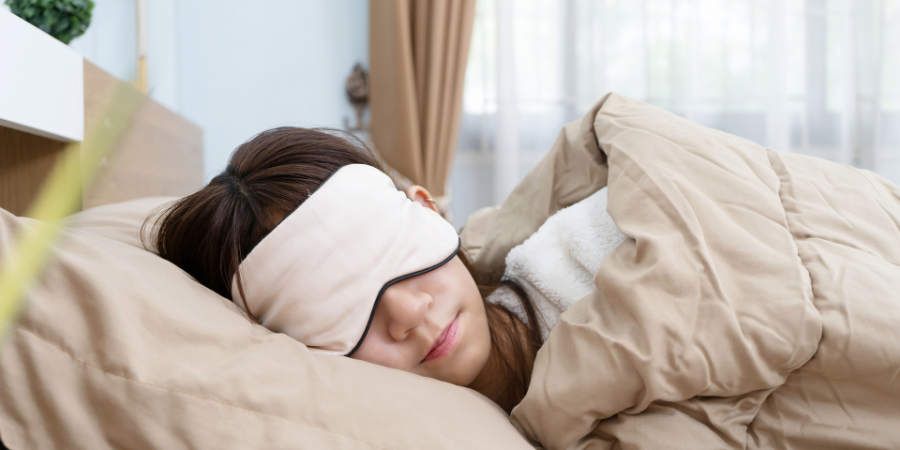
A sleep mask solves the edge problem in a different way. Instead of covering a large window, it seals directly against your face, so there is no room-sized gap for light to travel through before it reaches your eyes.
The mask’s own weak point is smaller and more personal: the bridge of the nose. A flat mask lies across this dip in your face without matching its shape, and even a narrow slit here lets in a surprising amount of light, especially from a hallway light or an early sunrise. Contoured masks fix most of this with a shaped or padded nose seal following your face instead of bridging over it.
The payoff for solving this gap shows up in controlled research. A study published in the journal Sleep had participants wear an eye mask every night for a week, then repeat a control week without one. The mask group showed better performance on a memory task and faster reaction times the next day, an improvement tied to how much slow wave sleep they got while wearing it. A second experiment used a mask with holes cut over the eyes as a control and did not see the same gains, which points to the light blocking itself as the reason, not comfort or placebo.
Fit matters more than price. A $10 mask with a good nose seal blocks more usable light than a $40 mask gapping at the bridge every time you turn your head. For options with different fits and materials, see our sleep mask recommendations. If you want a mask with a cooling element built in, our guide on sleeping with a gel eye mask covers that option too.
Blackout Curtains Versus Sleep Masks: A Side By Side Scorecard
We built this scorecard by lining up published lux testing from Consumer Reports and Wirecutter against the design factors deciding how much light a sleep mask blocks in real use, not just on the package. Each row focuses on the factor determining whether you sleep in the dark or wake up to a stripe of morning light across your pillow.
| Factor | Blackout Curtains | Sleep Masks |
|---|---|---|
| Light blocked through the material | 85% to 99% | Close to 100% against the eye |
| Main weak point | Gaps at the top, sides, and bottom | Gap at the nose bridge |
| Works for a shared bedroom | Yes, covers both sleepers at once | No, covers one person only |
| Works while traveling | No | Yes, packs flat |
| Adds insulation and noise reduction | Yes | No |
| Typical price | $15 to $50 per panel, more for insulated or motorized styles | $5 to $25 standard, $50 to $90 for contoured designs |
| Fastest fix for total darkness tonight | No, needs correct installation | Yes, works the first night |
Which One Should You Choose
- Pick a sleep mask if you share a bed with someone on a different schedule, travel often, or need a fast fix without buying new hardware.
- Pick blackout curtains if you want a dark room without wearing anything, share a room with a child or partner who also needs darkness, or want the added benefit of insulation and noise reduction.
- Combine both if you work night shifts, live under bright streetlights, or already use one option and still wake up to morning light. The curtain handles the bulk of the room. The mask closes whatever gap the curtain misses.
How To Get The Most Light Blocking From Either Option
For curtains:
- Mount the rod as close to the ceiling as possible and extend it 4 to 6 inches past the window frame on each side.
- Overlap the two panels by at least 4 inches at the center.
- Add a wrap around curtain rod or a fabric side seal if light still leaks at the edges.
- Choose a darker color. Darker fabric blocks more light than the same weave in a light color.
For masks:
- Pick a contoured design if you have a prominent nose bridge or sleep on your side.
- Adjust the strap so the mask sits with even pressure across your forehead and cheekbones instead of behind your ears alone.
- Replace a mask once the elastic loosens. A loose strap breaks the seal at the nose the same way a short curtain breaks the seal at the floor.
The Bottom Line
A sleep mask blocks light more completely because it seals against your face instead of a window frame. Blackout curtains block most of the light in a room but almost always leak at the edges unless you install them carefully or add a sealed track system.
If you need one answer tonight, a well-fitted contoured sleep mask gets you closer to true darkness than a standard rod-hung curtain. If you want a dark room you do not have to wear, invest in properly mounted blackout curtains and treat a mask as backup for early morning light.
Sources
- Gooley, J.J., et al. “Exposure to Room Light Before Bedtime Suppresses Melatonin Onset and Shortens Melatonin Duration in Humans.” Journal of Clinical Endocrinology & Metabolism, 2011. pubmed.ncbi.nlm.nih.gov/21193540
- Mishra, I., et al. “Light Exposure During Sleep Impairs Cardiometabolic Function.” PNAS, 2022. pnas.org/doi/10.1073/pnas.2113290119
- Greco, V., et al. “Wearing an Eye Mask During Overnight Sleep Improves Episodic Learning and Alertness.” Sleep, 2022. ncbi.nlm.nih.gov/pmc/articles/PMC9995773
- Sleep Foundation. “Light and Sleep: Effects on Sleep Quality.” sleepfoundation.org/bedroom-environment/light-and-sleep
- National Institutes of Health. “Artificial Light During Sleep Linked to Obesity.” nih.gov/news-events/nih-research-matters
- Zhang, D., et al. “A Large Prospective Investigation of Outdoor Light at Night and Obesity in the NIH-AARP Diet and Health Study.” Environmental Health, 2020. pmc.ncbi.nlm.nih.gov/articles/PMC7329409
- Consumer Reports. “Best Blackout Curtains of the Year.” consumerreports.org
- Mayo Clinic. “Mayo Clinic Minute: Is Melatonin the Right Sleep Aid for Me?” youtube.com/watch?v=x7CuirsCNSo