Is It Better to Sleep in a Cold or Warm Room?
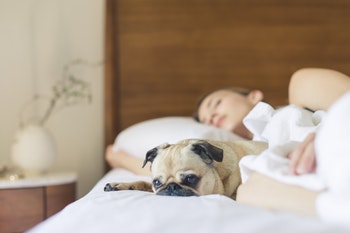
For most healthy adults, a cool room beats a warm one. Sleep specialists point to a target range of 60°F to 67°F (15°C to 19°C) for falling asleep faster and staying in deep, restorative sleep. Brian Chen, MD, a sleep specialist at Cleveland Clinic, recommends this same range and notes it runs cooler than what most people keep their thermostat set to at night.
A too-cold room still works against you. It costs you less sleep than an overheated one, but comfort and blood pressure both take a hit if the air runs frigid. The goal is not the coldest room possible. It is a room cool enough to support what your body already tries to do on its own each night.
Written with the assistance of Claude AI, reviewed by the Sleep Well Tips team using peer-reviewed sleep research
What Your Body Does Before You Fall Asleep
Your core temperature starts dropping roughly two hours before your usual bedtime. This drop is part of your circadian rhythm, the internal clock your hypothalamus runs, and it works alongside reduced muscle activity and shifts in your nervous system to pull your body toward sleep.
Here is the part most temperature guides skip. Your body sheds this heat mainly through your skin, not through the air around you directly. Blood vessels near the surface widen in a process called vasodilation, sending warm blood outward and letting heat escape through your hands, feet, and torso. Researchers measure the gap between your core and skin temperature and call it the distal-proximal skin gradient. A wider gap predicts how fast you fall asleep better than core temperature alone does.
This mechanism explains a detail worth knowing. In one sleep-lab study, researchers raised skin temperature near the torso by less than one degree Celsius and cut the time it took subjects to fall asleep by more than a quarter. Warming your skin, not the room itself, triggers the heat-loss signal your body needs to drift off.
It also explains why cold feet delay sleep even in an otherwise cool bedroom. People with chronically cold hands and feet report a higher rate of trouble falling asleep, likely because poor circulation blocks that heat-transfer signal before it starts.
The practical takeaway: the fix for a slow sleep onset is not always a warmer room. It is often warmer extremities inside a cool room. Warm socks or a hot water bottle at your feet let your body dump heat efficiently while the air around you stays cool enough to support deep sleep later in the night.
Why An Overheated Room Costs You More Than A Chilly One
Once you fall asleep, your body mostly stops actively regulating temperature, especially during REM sleep. Sweating and shivering both drop off, leaving you exposed to whatever the room does next.
High ambient heat shortens both REM sleep and slow-wave sleep, the two stages tied to memory consolidation, tissue repair, and immune function. A body stuck too warm cannot finish its normal core temperature drop, and sleep stays lighter and more easily interrupted as a result.
Cold exposure carries its own downsides. It disrupts comfort and appears linked to changes in blood pressure during sleep. Researchers still rate it as less damaging overall than an overheated room, mainly because a cold room rarely stops the core temperature drop the way heat does. It just makes the process less pleasant.
The Right Range For Each Sleeper
The chart above lays out the ranges sleep researchers point to across four groups. Adults do best around 60°F to 67°F. Toddlers and infants need a warmer nursery. Older adults often need a warmer bedroom too, for reasons covered below.
Comfort still varies person to person. A 2023 survey from Casper and Gallup found one in five American adults report feeling too hot or too cold on most nights, regardless of what the thermostat reads. Body composition, medication, hormone changes, and how insulated your home is all shift your personal number a few degrees in either direction. Treat 65°F (18°C) as a starting point, not a fixed rule.
Babies And Toddlers Need A Warmer Room, Not A Colder One
Infants regulate body heat far less efficiently than adults do. The American Academy of Pediatrics lists overheating as a risk factor for sudden infant death syndrome, though studies define overheating differently from one another, which makes a single temperature threshold hard to set.
Rather than chase an exact number, the AAP recommends focusing on layers. Dress your baby in no more than one layer beyond what feels comfortable to you in the same room. Check the back of their neck or chest for sweating or heat rather than their hands or feet, since extremities run cooler naturally and are not a reliable signal in infants.
Skip hats indoors, and keep the crib bare: a firm mattress and a fitted sheet, with no loose blankets, pillows, bumpers, or weighted sleepers. These add both overheating and suffocation risk. Most nurseries land between 68°F and 72°F (20°C to 22°C), a few degrees warmer than an adult bedroom.
If you are unsure how to dress your baby for sleep, or if sleep changes show up alongside signs of illness, check with your pediatrician rather than relying on a general guideline.
Older Adults Often Sleep Better Warmer
Aging changes how well your body retains heat. A 2023 study from the Marcus Institute for Aging Research at Harvard Medical School tracked 50 adults aged 65 and older across more than 11,000 nights using wearable sensors and home temperature monitors. Sleep held up best when bedroom temperatures stayed between 68°F and 77°F (20°C to 25°C). Once nighttime temperatures climbed past 77°F, sleep efficiency dropped by 5 to 10 percent.
Researchers tie this shift to reduced circulation and slower metabolic heat production with age. A room that feels comfortably cool to a younger sleeper runs colder than ideal for someone in their seventies or eighties. If you share a bed across a wide age gap, this is often the real source of the thermostat disagreement, not a difference in preference alone.
How To Cool Down A Room Without Overworking The AC
- Point a fan across your body rather than around the room, since moving air speeds evaporative cooling directly on your skin.
- Freeze a bottle of water and set it in front of a fan for a low-cost alternative to air conditioning.
- Swap heavy blankets for a lightweight, breathable sheet in cotton or linen.
- Close blinds during the day to block solar heat, then open windows once outdoor air cools in the evening.
- Skip caffeine, sugary food, and a hot shower in the two hours before bed. All three raise your core temperature at the exact time it needs to drop.
How To Warm Up A Room Without Overheating It
- Layer bedding instead of raising the thermostat. Add or remove a layer as your body temperature shifts overnight.
- Warm your feet with socks or a hot water bottle for ten minutes before bed, then set the bottle aside. This nudges the skin gradient covered earlier without heating the whole room.
- Close the bedroom door and add a draft excluder to keep warm air in and cold air out.
- Run a space heater on a timer instead of all night, and keep it well away from bedding and curtains.
Signs Your Room Temperature Is Off
- Waking up sweaty or kicking off the covers points to a room running too warm.
- Cold hands, cold feet, or waking up shivering points to a room running too cold.
- Frequent waking with no obvious cause is worth checking against your thermostat before you look elsewhere.
Find Your Number
Start at 65°F (18°C) if you are an adult without a specific health condition. Adjust the thermostat two to three degrees at a time and give each setting three or four nights before judging it. Track how you feel in the morning rather than how the room feels right at bedtime, since comfort at 3 a.m., once your body finishes its temperature drop, tells you more than comfort at 10 p.m. does.
Pair the right temperature with the rest of your bedroom setup. Our guide on How to Create the Ideal Sleep Environment for Better Rest walks through humidity, light, and air quality alongside temperature. If cold feet or a racing mind keep you up regardless of the thermostat, What Is Sleep Hygiene? A Simple Guide to Better Nightly Habits covers the daytime habits that shape how well you sleep at night. For more on why a cool room supports deeper sleep stages specifically, see How to Increase Deep Sleep Naturally.
For a walkthrough of a full sleep-environment setup on video, Mayo Clinic’s Human Optimization Project covers it here: How to Fix Your Sleep Environment.
Sources
- Sleep Foundation, Best Temperature for Sleep
- Cleveland Clinic Newsroom, Best Bedroom Temperature for Sleep
- Cleveland Clinic Health Essentials, What’s the Best Temperature for Sleep
- American Academy of Pediatrics, Sleep-Related Infant Deaths: Updated 2022 Recommendations, Pediatrics
- Harding et al., Body Temperature and Sleep, PubMed
- Van Someren, Circadian Clues to Sleep Onset Mechanisms, PubMed
- Raymann et al., Cutaneous Warming Promotes Sleep Onset, American Journal of Physiology
- Baniassadi et al., Nighttime Ambient Temperature and Sleep in Community-Dwelling Older Adults, Marcus Institute for Aging Research